
Solving for Laboratory Sustainability: Meet T2 Design Lab
April 22, 2026, 09:55 GMT
The future of global health security depends not only on breakthrough innovations, but also on laboratories’ capacity to adapt to the environments in which they operate. Through the BioPREVAIL Built Environment Design Challenge, a new generation of innovators is rethinking how high-containment laboratories (HCLs) are designed, built, and sustained—especially in resource-constrained settings where they are needed most.
Today, many HCLs in constrained settings are imported models from countries with ready access to basic needs such as water, electricity and broadband networks. While technically advanced, these model facilities are often over-engineered for their context. They come with high energy demands, complex maintenance needs, and supply chain dependencies that make long-term operation difficult. The result is a cycle of reliance on external funding, leaving local institutions struggling to maintain critical infrastructure.
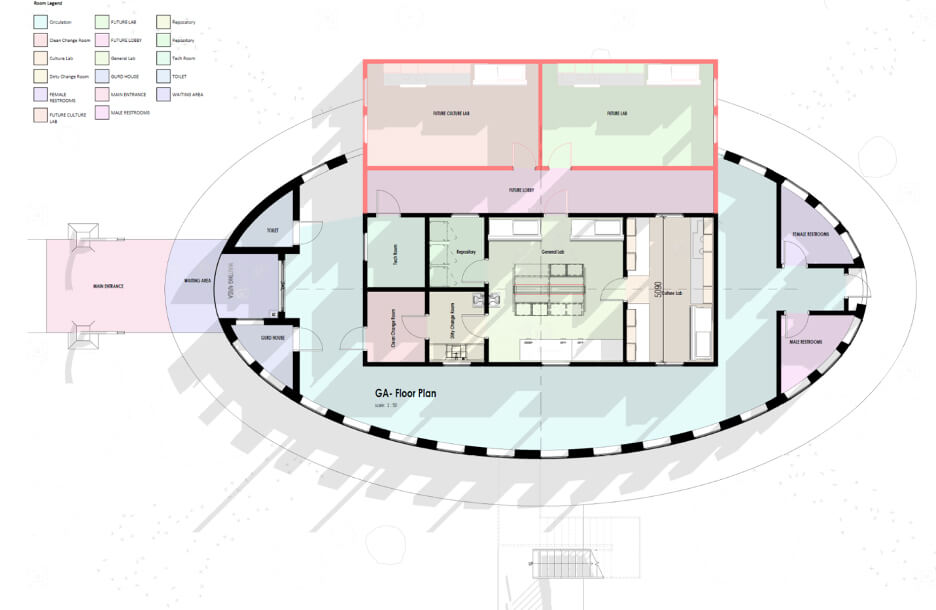
This cohort team, T2 Design Lab, tackles that challenge head-on with a bold and practical vision: a context-appropriate HCL design that is affordable, energy-efficient, and built for long-term sustainability. Their approach centers on modular systems that can be locally maintained, reducing both upfront capital costs and ongoing operational expenses—without compromising biosafety and biosecurity standards.
At the heart of this effort is a multidisciplinary team bringing together expertise across architecture, engineering, and biosafety. Thembalethu Moyo, an architect from South Africa, leads the spatial and design strategy with a focus on adaptability and sustainability. Salome Kumba, a biomedical engineer from Tanzania, contributes technical insight into laboratory systems and performance. Thendo Netshilema, an assistant biosafety technician from South Africa, ensures that real-world biosafety practices and operational realities are embedded into the design.
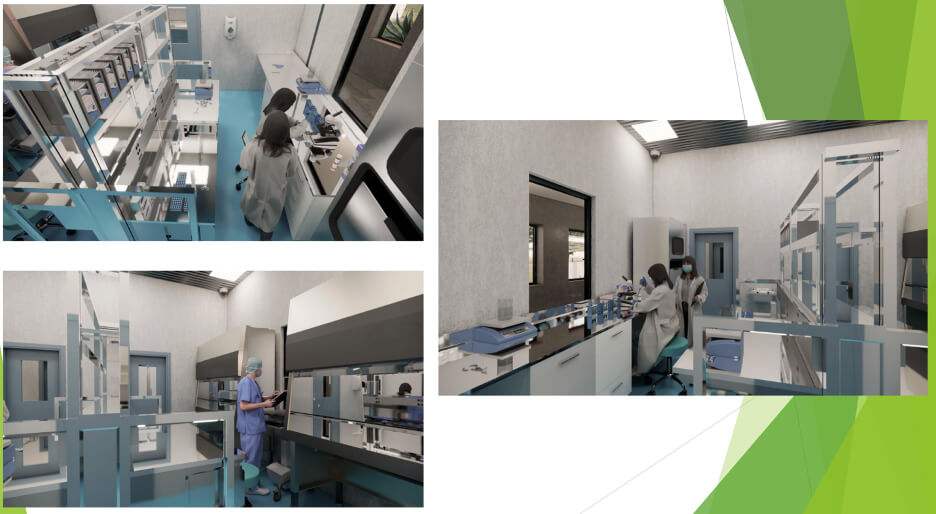
Together, they are creating a prototype that reflects both global best practices and local relevance. Their design integrates passive solar strategies, renewable energy systems, and water-sensitive landscaping tailored to specific environments. The HVAC system is engineered for efficiency, using smart technology to adjust airflow based on real-time demand while maintaining high indoor air quality. Material selection also prioritizes low environmental impact and local availability.
(Source: T2 Design Lab)
Security and safety remain paramount. The design includes controlled access systems, robust waste lifecycle management, and remote-monitoring CCTV—ensuring that biosafety and biosecurity standards are upheld at every level.
What sets this team apart is not just their technical solution, but their mindset. Their key learnings emphasize that cost efficiency is not a compromise—it is essential for functionality. Local resource utilization is not a limitation—it is a strength. And adherence to global standards is not optional—it is foundational. By embracing modularity and scalability, they are building a model that can evolve and expand alongside the needs of the communities it serves.
Now, the team is ready for the next step: piloting their “sandbox” design as a working prototype. This phase will be critical to test assumptions, validate performance, and refine the model for broader implementation.
Their work represents more than a design solution—it is a shift in how we think about infrastructure equity in global health. With the right support, this approach has the potential to unlock sustainable, locally driven laboratory capacity around the world.
This is the kind of innovation the BioPREVAIL challenge was built to inspire. And this team is proving that with the right vision and collaboration, meaningful change is not only possible—it is already underway.