
Contain & Sustain: Effluent Waste Treatment Made Simple and Affordable
March 16, 2026, 06:05 GMT
Team members: Awie van Rensburg, Timeletso Leteka
Effluent waste rarely makes headlines in laboratory design discussions, yet it plays a critical role in biosafety. Every day, laboratories generate liquid waste that may contain biological material capable of causing harm if released untreated into the environment. Managing that waste safely is essential—but in many parts of the world, the systems designed to do so are often complex, expensive, and difficult to maintain.
That challenge is what inspired Contain & Sustain, a project developed as part of the BioPREVAIL Built Environment Design Challenge. The team behind the project set out to rethink effluent treatment with a simple question in mind: What if effective biological waste treatment could be simpler, more affordable, and easier to operate?
Leading the effort is Awie van Rensburg, Chief Technical Officer at Air Filter Maintenance Services International (AFMS) in Johannesburg, South Africa. Working alongside him is Timeletso Leteka, a mechanical engineer who is also part of the company’s engineering team.
As Awie explains in the project introduction, the team was excited to take part in the BioPREVAIL initiative and contribute an idea aimed at improving laboratory infrastructure globally. Based in South Africa, their company specializes in technical solutions for controlled environments, making the challenge of safe laboratory waste management a natural focus for their work. The engineers bring their experience in mechanical systems and laboratory infrastructure to the challenge.
Effective Disinfection for Biological Liquid Waste
Their solution centers on a critical but often overlooked piece of laboratory infrastructure: the Effluent Decontamination System (EDS). These systems are responsible for chemically disinfecting biological liquid waste before it is released into municipal wastewater systems. In facilities working with infectious materials, this step is essential for protecting public health and preventing pathogens from entering the environment.
In many high-containment laboratories, EDS units are fully automated systems integrated into building infrastructure. While effective, these systems come with significant drawbacks. They can be expensive to install, require specialized maintenance, and depend heavily on stable power supplies and technical support. For laboratories in regions with limited infrastructure or funding, these systems can be difficult to deploy and sustain.
Affordable, Accessible Power of Bleach
Contain & Sustain approaches the problem from a different angle. Instead of relying on complex automation, the team designed a manual effluent decontamination system that focuses on reliability, affordability, and ease of use. The philosophy behind the design is straightforward: innovation doesn’t always mean adding more technology. Sometimes it means simplifying a system so that it works more reliably in real-world conditions.
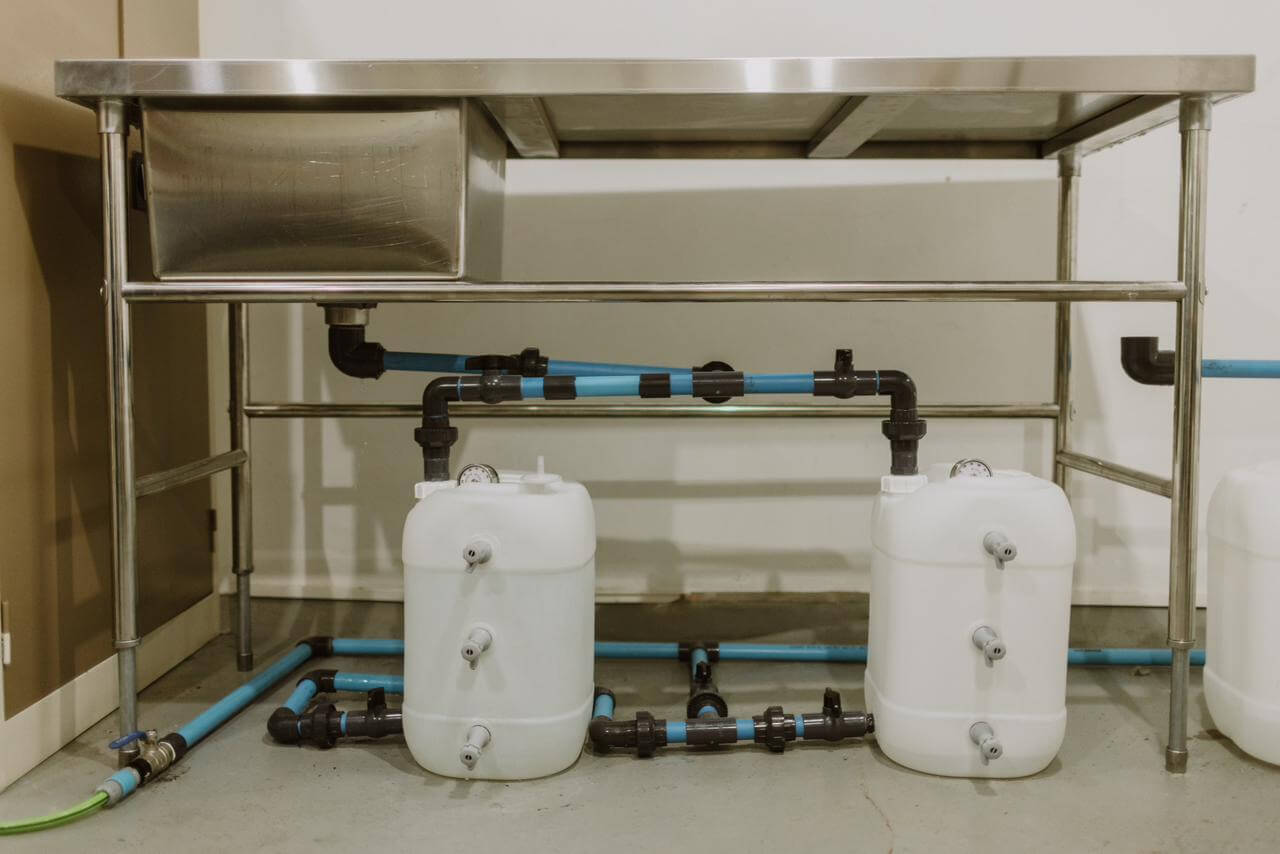
The system uses two treatment tanks and a series of inlet and outlet valves to manage the flow of biological liquid waste through the disinfection process. Waste enters the system, where it is treated chemically before being discharged safely. The design incorporates durable, non-corrosive piping materials and includes a HEPA-filtered vent to ensure that air leaving the tanks does not carry contaminants into the surrounding environment. A key feature of the system is its reliance on bleach as the primary disinfectant. The choice is deliberate. Bleach is widely available around the world, inexpensive, and well understood as a disinfectant. It is effective against a wide range of pathogens, works quickly, and requires minimal specialized training for operators.
By using a chemical that laboratories already know how to handle, the system becomes easier to adopt and operate. It also reduces the need for specialized supply chains or technical expertise.. Throughout development, they considered issues such as mixing consistency, treatment effectiveness under high-organic waste conditions, and operator usability. Planned improvements include the addition of a simple agitator to ensure consistent mixing of disinfectant and waste, as well as testing the system under worst-case scenarios—such as wastewater containing detergents from laboratory handwashing stations.
Sustainability Through Simplicity and Education
Equally important is the documentation that will accompany the system. The team plans to provide clear setup guides, validation protocols, and operation and maintenance manuals. Visual graphs and standard operating procedures will help users determine the correct chemical concentrations needed for effective treatment.
For this BioPREVAIL Built Environment Design Challenge, the goal is not simply to create a functional piece of equipment. It is to create a system that laboratories anywhere in the world can realistically adopt. As Awie notes, “the hope is that the manual waste management system will make a meaningful difference for laboratories globally. Its scalability, affordability, sustainability, and ease of operation are central to that vision.”
The team is particularly excited to present their work at the BioPREVAIL showcase event, where they will share the concept and demonstrate how a simplified approach to effluent treatment could expand access to safer laboratory waste management.
Contain & Sustain is a reminder that impactful innovation does not always come from making systems more complex. Sometimes, the most powerful solutions are those that remove barriers—cost, infrastructure, and technical complexity—while still delivering reliable protection for people and the environment.
By reimagining how laboratories treat biological liquid waste, this BioPREVAIL challenge team is helping make safe effluent management more accessible, sustainable, and practical for laboratories around the world. To learn more, visit the AFMS website.